
If you’ve ever stepped into an off grid cabin, tiny home, or caravan and spotted a composting toilet, chances are you’ve had the same thought most Aussies do:
“How on earth does that actually work?”
Fair question. A lot of people love the idea of saving water and avoiding septic headaches, but still picture smells, mess, or something far more complicated than it really is.
The truth is, composting toilets are surprisingly simple once you understand what’s happening inside the system.
In this guide, we’ll break down how composting toilets work step by step, explain why they stay low odour, and show how waste naturally breaks down over time without using water.
What Is a Composting Toilet?
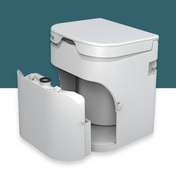
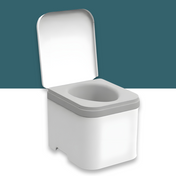
A composting toilet is a waterless toilet system that breaks down human waste naturally instead of flushing it into a sewer or septic system. Rather than using water, composting toilets rely on airflow, moisture control, and organic material like sawdust or coconut coir to support the composting process inside the chamber.
They are popular in caravans, tiny homes, off grid cabins, rural properties, and remote setups where water access or septic installation is limited.
What Are the Key Components of a Composting Toilet?

How a composting toilet system processes waste.
A composting toilet uses a few simple parts that work together to manage waste, reduce moisture, and support natural decomposition.
The main components include:
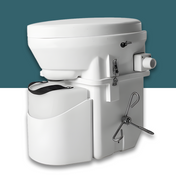
- Urine separator: Separates liquid waste from solid waste to help keep the composting chamber drier and reduce odours.
- Composting chamber: The area where solid waste is collected and gradually breaks down over time.
- Ventilation system: Uses airflow to remove moisture, control odours, and keep oxygen moving through the system.
- Vent pipe and fan: Help pull air out of the toilet and improve ventilation inside the chamber.
- Access hatch or collection tray: Allows finished compost material to be removed when it’s ready.
- Cover material: Organic material like sawdust or coconut coir added after use to absorb moisture and support decomposition
Each component plays an important role in helping the system stay clean, low odour, and easy to maintain.
There are also plenty of composting toilet accessories available to support ventilation, maintenance, and everyday use.
If you’re new to composting toilets, you can also read our beginner’s guide to composting toilets for homes and caravans.
How Does a Composting Toilet Work?
Unlike a regular flushing toilet, a composting toilet doesn’t use water to move waste away.
Instead, it manages waste naturally inside the system using:
- Airflow
- Moisture control
- Oxygen
- Dry organic material
- Natural decomposition
Over time, solid waste gradually breaks down into compost-like material inside the chamber.
Here’s a step-by-step breakdown of the composting process.
Step 1: Preparing the Composting Chamber

Adding organic bulking material to the chamber.
Before using the composting toilet, the composting chamber is usually prepared with a layer of dry organic material, such as:
- Sawdust
- Coconut coir
- Peat moss
- Hemp fibre
This material absorbs moisture and creates the right condition for composting to begin. It also improves airflow inside the chamber and helps reduce odours as waste starts to break down. Think of it as the foundation layer that keeps the system balanced. Once the chamber is prepared, the toilet is ready for everyday use.
Step 2: Separating Liquid and Solid Waste

Installing a removable urine collection container.
One of the biggest reasons composting toilets work so effectively is waste separation. Inside a composting toilet, liquids and solids are usually directed into separate areas.
- Liquids are diverted into a separate container or drain system
- Solid waste drops into the composting chamber below
Keeping excess moisture away from the solids chamber is important because too much moisture can slow decomposition and create smells.
By separating liquid and solid waste:
- The chamber stays drier
- Airflow improves
- Odours reduce
- Composting works more efficiently
This is one of the key reasons modern composting toilets stay surprisingly low odour.
Step 3: Airflow and Ventilation

Air ventilation system exhausting odors from the unit.
Good airflow is what keeps a composting toilet working properly. Most systems use a ventilation kit and vent pipe to constantly move air through the chamber.
This airflow helps:
- Removes excess moisture
- Improve oxygen flow
- Support decomposition
- Direct odours outside
A well-ventilated composting toilet should smell more earthy than unpleasant. That’s why proper ventilation is one of the most important parts of the system.
Many off-gridders choose a composting toilet with proper ventilation specifically because they’re low maintenance and low odour when set up correctly.
Step 4: Breaking Down Waste Naturally

Schematic of a split-system urine-diverting composting toilet.
Once airflow and moisture levels are balanced, the composting process begins naturally inside the chamber.
Microbes start breaking down the solid waste with the help of:
- Oxygen
- Dry organic material (sawdust or coconut coir)
- Airflow
- Time
As decomposition continues:
- Moisture evaporates
- Waste volume reduces
- Material becomes drier
- Compost-like matter gradually forms
Some systems also include a mixing handle or agitator to help improve airflow and encourage more even decomposition.
This is the part many people are surprised by. Inside a composting toilet, waste doesn’t simply sit there. The system is actively helping it dry out and break down over time.
Step 5: Removing Finished Compost

Steps for emptying compost and using it safely outdoors.
Source: Ecoflo YouTube Video
As the composting process continues, the material inside the chamber gradually becomes dry, soil-like compost. Depending on the system and how often it’s used, this process can take anywhere from several weeks to a few months. Once fully broken down, the material can be removed through an access hatch or collection tray.
Most modern composting toilets are designed to make this process simple and manageable with regular maintenance. For many households, emptying the solids chamber is far less frequent than expected because waste volume reduces significantly during decomposition.

Step-by-step lifecycle flow of a composting toilet process.
Do Composting Toilets Smell?
This is one of the most common questions people ask.
The short answer: Not when they’re maintained properly.
Most composting toilets stay low odour because:
- Liquids and solids are separated
- Airflow constantly removes moisture
- Ventilation directs smells outside
- Dry material absorbs excess moisture
In many cases, users say composting toilets smell less than traditional portable toilets. If unpleasant smells do appear, it’s usually a sign that the chamber is too wet or that ventilation needs attention. Simple odour management strategies can help keep composting toilets fresh and functioning at their best.
"A properly maintained composting toilet shouldn’t smell like a portable toilet or raw sewage."
How to Properly Maintain a Composting Toilet
Composting toilets are fairly low maintenance, but regular upkeep helps keep the system running smoothly.
Simple maintenance tasks include:
- Adding dry cover material like sawdust or coconut coir when needed
- Emptying the liquid container
- Checking the ventilation fan
- Removing finished compost occasionally
- Keeping airflow unobstructed
The main goal is to maintain the right balance between airflow and moisture. With regular care, composting toilets are designed to stay clean, hygienic and easy to manage for everyday use.
Frequently Asked Questions

Manual scrubbing and maintenance of the toilet bowl.
Are composting toilets hygienic?
Yes. Composting toilets are designed to keep waste contained in a controlled environment. With proper airflow and regular maintenance, they stay clean, hygienic, and suitable for everyday use.
Do composting toilets use water?
No. Composting toilets work without water, which makes them a popular choice for off grid homes, caravans, tiny homes, and remote properties where saving water is important.
Do composting toilets need plumbing?
Most composting toilets don’t need traditional plumbing or connection to a septic system. Some models may still use a small drain for liquid waste and a ventilation setup for airflow.
How long does waste take to compost in a composting toilet?
The composting process happens gradually over time. Depending on the system and how often it’s used, it can take anywhere from several weeks to a few months for waste to fully break down.
What material do you add to a composting toilet?
Most composting toilets use dry organic material like sawdust, coconut coir, peat moss, or hemp. These materials help absorb moisture and support the composting process.
Are composting toilets hard to maintain?
Not really. Most composting toilets only need simple maintenance like emptying the liquid container, adding dry material when needed, and removing finished compost occasionally. Many people find them easier to manage than expected.
Final Thoughts

A fully installed modern composting toilet system.
Once you understand how composting toilets work, the whole system feels far less mysterious. By separating waste, improving airflow, and supporting natural decomposition, composting toilets offer a practical water-saving solution for off grid living, caravans, tiny homes, rural properties, and remote worksites.
Ready to find the right system for your setup? Explore Eco Off Grid’s range of composting toilets designed for practical, low-maintenance off grid living.